
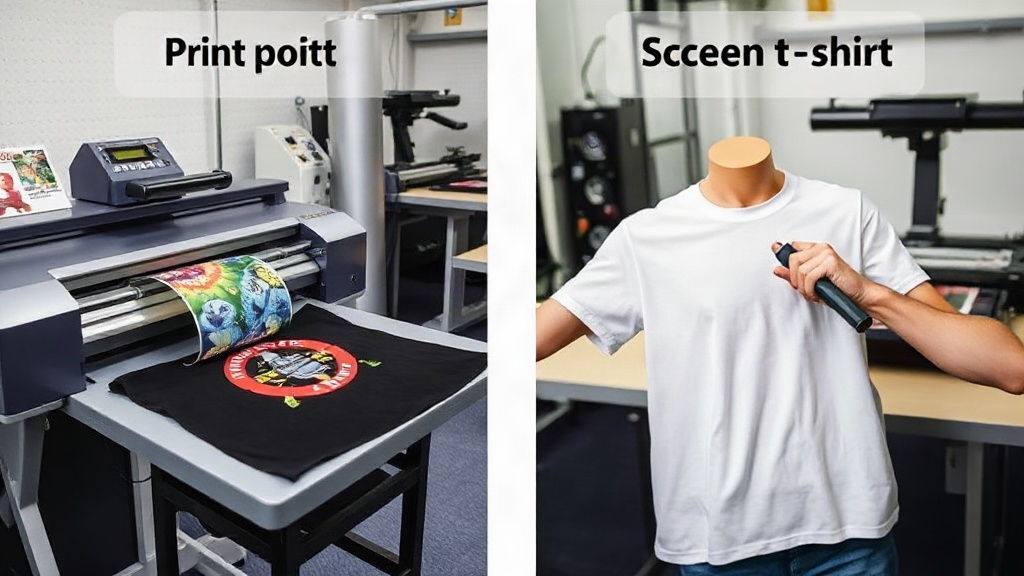
If you're in the custom apparel business, you've likely heard about DTF (Direct to Film) printing. It's been gaining popularity rapidly, and for good reason. But how does it stack up against the traditional powerhouse, screen printing? In this comprehensive guide, I'll break down the differences between these two methods to help you decide which one is right for your business. Whether you're just starting out or looking to expand your services, this comparison will give you the insights you need.
Over the years, I've worked with both technologies in my own print shop. I've seen the pros and cons firsthand. So, let's dive into the nitty-gritty and explore the key factors: cost, durability, setup time, quality, and versatility.
What is DTF Printing?
DTF transfers involve printing your design onto a special PET film using a DTF printer. The design is printed in reverse, and then a layer of adhesive powder is applied. After the powder is cured, the transfer can be placed onto a garment and heat-pressed. The result is a vibrant, detailed print that can be applied to a wide variety of fabrics, including cotton, polyester, blends, and even hard surfaces like mugs.
One of the biggest advantages of DTF is its ability to handle complex, full-color designs with gradients and fine details without any extra steps. You don't need to worry about color separations or mesh screens. It's a one-and-done process that's incredibly efficient for small to medium runs.
What is Screen Printing?
Screen printing, also known as silk screening, is a traditional method that uses a mesh screen to transfer ink onto a substrate. For each color in the design, a separate screen must be created. The screen is coated with a light-sensitive emulsion, and the design is burned onto it. Then, ink is pressed through the mesh onto the garment using a squeegee.
This method excels at producing durable, bold prints, especially on light-colored garments. It's cost-effective for large runs because the per-unit cost decreases as the quantity increases. However, the setup is time-consuming and requires specialized equipment and skills.
Cost Comparison: Setup and Per Unit
When it comes to startup costs, DTF printing is generally more accessible. A basic DTF setup includes a printer (often a modified Epson), PET film, adhesive powder, and a heat press. You can get started with a few thousand dollars. In contrast, screen printing requires a more significant investment: screens, exposure unit, washout booth, and multiple squeegees, not to mention the space and ventilation.
For per-unit costs, DTF is slightly higher than screen printing for large quantities. However, for short runs, DTF is far more economical because there's no screen setup cost. If you're fulfilling orders of one to fifty pieces, DTF wins hands down. But if you're printing hundreds of identical shirts, screen printing offers a lower cost per piece and faster production speed.
Durability and Feel: Which Lasts Longer?
One of the most critical factors for customers is how the print feels and how long it lasts. Screen printing is known for its durability. The ink is literally forced into the fabric, and when done correctly, it can withstand hundreds of washes without cracking or fading. The print has a slight texture, but it's barely noticeable on most garments.
DTF has come a long way in terms of durability. High-quality DTF transfers can last nearly as long as screen prints, especially if the garment is washed inside out and on cold. The feel is often softer than screen printing, because the adhesive layer is thin and the ink sits on the surface. However, some budget DTF films or powders can crack or peel over time. That's why it's crucial to invest in quality materials and proper curing.
Setup Time and Flexibility
Screen printing setup is notoriously time-consuming. For each color, you need to burn a screen, align it, and test. A multi-color design can take hours to set up. That's why screen printing shops often have minimum order quantities (MOQs) of 12 or more. If you need a single custom shirt for a gift or a small batch for a local event, screen printing is not practical.
DTF, on the other hand, is incredibly flexible. Once you have your digital file, you can print a single transfer in minutes. You can easily produce different designs on the same order without any additional setup. This makes DTF a game-changer for online stores, print-on-demand services, and personalized orders.
Design Capabilities and Detail
If you're dealing with highly detailed designs, DTF is the winner. DTF prints with high resolution, typically 1440 dpi, which means crisp lines and vibrant colors. Gradients and shadows are reproduced accurately without any halftone patterns. You can even print white ink under the design to ensure opacity on dark garments.
Screen printing can achieve excellent results, but it requires careful color separation and halftoning. For detailed designs, the process becomes complex and costly. Solid, bold graphics are where screen printing shines, especially for simple logos and text.
Environmental and Safety Considerations
Both methods have environmental impacts. Screen printing uses inks that may contain PVC and phthalates, although water-based and discharge inks are eco-friendlier options. The process also involves chemical emulsions and cleanup solvents.
DTF uses water-based inks, which are generally more eco-friendly. However, the PET film and adhesive powder are not biodegradable, so there is waste. Some companies offer recyclable or compostable films, but they're not yet widely available. If sustainability is a core value of your business, you'll need to weigh these factors carefully.
DTF Transfers Near Me: Where to Find Them
If you're not ready to invest in DTF equipment, you might be looking for DTF transfers near me. A quick search can reveal local print shops that offer DTF transfer services. Ordering from a local vendor can save shipping time and allow for faster turnaround. But ensure they use high-quality films and powders. You can also order custom DTF transfers online from reputable companies, and they'll ship them to your door.
Many screen printing shops are now offering DTF as an add-on service. It's a win-win: they can handle small orders without changing their production line, and you get the benefits of DTF without the upfront cost.
Making the Choice: Which Is Better for Your Business?
So, which method should you choose? It depends on your business model, budget, and target market. Here's a summary to help you decide:
- If you're a small business or startup with limited capital, DTF is the more affordable entry point. You can offer a wide range of products without investing in a full screen printing setup.
- If you plan to produce large quantities of the same design, screen printing is more cost-effective in the long run. The per-unit cost drops significantly with volume.
- If you value flexibility and quick turnaround times, DTF is superior. You can fulfill orders on-demand and easily customize items.
- If you're printing mostly on dark or blended fabrics, DTF handles them all with ease. Screen printing requires special inks for dark garments, which adds complexity.
- If you need the most durable prints possible, screen printing still holds the edge, but quality DTF is close behind.
In my experience, many successful businesses use both methods. They offer screen printing for bulk orders and DTF for small runs, samples, or promotional items. That way, they get the best of both worlds.
Common Questions About DTF and Screen Printing
Can DTF prints withstand frequent washing?
Yes, if applied correctly. The key is to ensure the adhesive powder is properly cured and the heat press temperature and pressure are accurate. Washing the garment inside out in cold water also extends the life of the print. Quality DTF transfers can last up to 50 washes or more without significant fading or cracking.
Is DTF more expensive than screen printing?
For small quantities, DTF is actually cheaper because there's no setup fee. For large quantities, screen printing becomes more cost-effective. As a rule of thumb, if you're printing fewer than 50 pieces, DTF is usually more affordable. For more than 100 pieces, screen printing typically offers a lower cost per unit.
Can you use DTF transfers on any fabric?
DTF works best on poly-cotton blends and 100% polyester. It can also be applied to cotton, but you need to use the correct pressure and temperature to avoid bleed. For 100% cotton, screen printing with water-based ink is often a better choice for a softer feel.
What is the minimum order quantity for screen printing?
Many screen printing shops have a minimum order of 12 to 24 pieces, depending on the number of colors and complexity. Due to the setup time, it's not practical for one-off orders. DTF has no minimum, so you can print a single transfer if needed.
Which method is better for detailed designs?
DTF is superior for detailed designs with many colors, gradients, or fine lines. Screen printing can reproduce details but requires complex color separations and may result in a less sharp image.
Final Thoughts
Both DTF and screen printing have their place in the custom apparel industry. DTF transfers offer flexibility, ease of use, and are perfect for small to medium runs. Screen printing remains the go-to for large-scale production with unmatched durability. The best approach is to evaluate your specific needs, consider your budget, and maybe even test both methods with a sample order.
If you're just starting, DTF is a fantastic way to enter the market without a massive investment. As your business grows, you can always add screen printing to your capabilities. Remember, the goal is to deliver quality products to your customers while running a profitable business. Choose the method that aligns with your goals, and you'll be on the right track.