
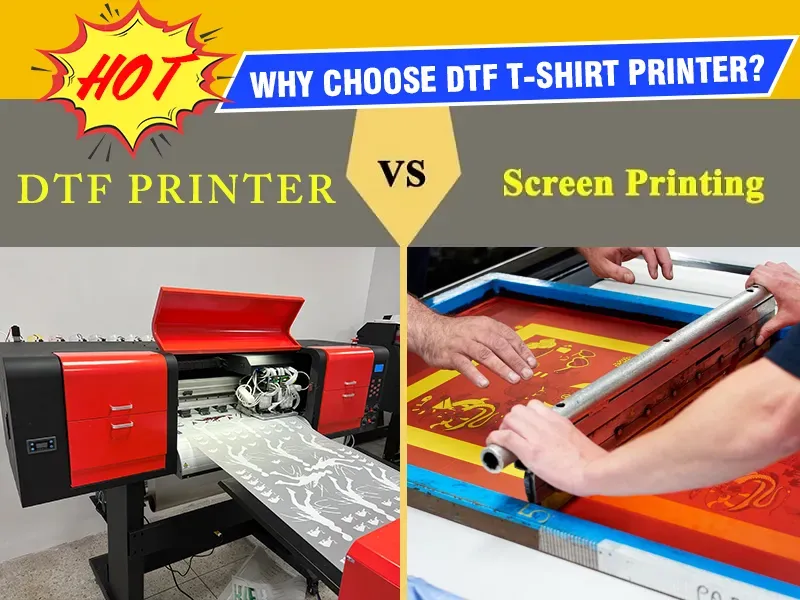
In the world of textile printing, the comparison between DTF vs. Screen Printing has emerged as a hot topic among businesses and consumers alike, underscoring the need for clarity in selecting the right method for their projects. DTF printing, or Direct to Film printing, offers a modern and innovative approach, producing vibrant images with stunning detail, while screen printing provides a traditional method known for its solid colors and durability. As various textile printing methods lead to different outcomes, understanding the DTF printing advantages and the screen printing pros and cons is essential for making an informed decision. This guide will delve into the intricacies of each technique, exploring their unique features to help you determine which printing solution best meets your specific requirements. By analyzing the characteristics, benefits, and challenges of DTF vs. Screen Printing, you can navigate the vibrant landscape of textile printing with confidence.
When it comes to evaluating textile printing techniques, the choice between Direct to Film (DTF) printing and traditional mesh-based printing often arises. Each method serves distinct purposes and caters to different audience needs in the realm of custom garment production. Exploring the characteristics of these two popular techniques, we can uncover essential insights, including the advantages of DTF printing and the challenges faced by screen printing. Understanding these alternatives not only enhances our appreciation for their functionality but also guides us in selecting the most appropriate approach for our specific project requirements. By comparing and contrasting these printing methods, businesses can tailor their production strategies to optimize efficiency and quality.
Understanding Direct to Film Printing
Direct to Film (DTF) printing is a revolutionary method in the field of textile printing that allows for intricate designs to be reproduced with exceptional quality. This technique involves printing designs onto a special film, which, upon application of heat and pressure, transfers the design onto various fabrics. One of the standout features of DTF printing is its ability to handle complex images, enabling businesses to create personalized and detailed products. With the increasing demand for custom apparel, DTF's vibrant colors and high-resolution outputs make it an ideal choice for many.
Another advantage of DTF printing is its relatively quick turnaround time for small runs of fabric. Unlike some traditional methods that require significant setup, DTF printing allows for efficient production of multiple colors and designs from the get-go. This speed is particularly beneficial for businesses that rely on quick order fulfillment to meet their client’s needs. Additionally, DTF printing does not require large minimum orders, making it accessible for small businesses and custom print shops.
Exploring Screen Printing Pros and Cons
Screen printing has long been a favorite in the textile printing domain, largely due to its robustness and ability to produce vibrant colors on various fabrics. The process involves creating a mesh screen for each color in the design, allowing the ink to be pushed through onto the material. One of the primary advantages of screen printing is its durability; screen-printed items generally withstand numerous washes without significant fading, making them suitable for high-use items like t-shirts and promotional gear. However, the complexity of the setup can be a downside, especially for designs that involve multiple colors or intricate details.
On the other hand, screen printing's limitations come into play with smaller production runs. The initial setup for each screen can be time-consuming and costly, which increases the overall expense for low-volume orders. Additionally, while it excels with solid colors, recreating fine details or gradients can be challenging and may not yield the best results. Thus, businesses must weigh the advantages of durability and vibrant output against the potential limitations in production flexibility when considering screen printing as their go-to method.
Cost-Effectiveness of DTF and Screen Printing
In the realm of cost-effectiveness, the choice between DTF and screen printing can significantly impact business expenses. DTF printing emerges as an economical option for small orders since it avoids the high setup costs associated with screen printing. The lower initial investment makes it attractive for startups where cash flow is a priority. However, as order sizes increase, the costs for ink and film used in DTF may start to outweigh its initial benefits, which causes businesses to reassess their printing method for larger designs.
Conversely, screen printing becomes more cost-effective as the volume of orders increases. The initial setup might be more expensive, but the cost per unit decreases significantly for larger orders due to the economies of scale. Hence, for businesses planning to produce large batches of the same design, screen printing often provides the best long-term financial advantage. It's essential for companies to consider their production volume when deciding which printing process offers better cost effectiveness.
Durability in Textile Printing Methods
When evaluating the durability of prints, screen printing typically holds an advantage over DTF printing. High-quality screen prints are renowned for their longevity, even under repeated wash cycles. This durability is largely due to the thick layers of ink used and the method's ability to adhere deeply to fabric fibers, which results in a vibrant print that can withstand the rigors of daily wear. For garments that require longevity, like uniforms or sportswear, screen printing is often the preferred choice.
DTF printing, while offering good durability under normal conditions, may not be as resilient in terms of washability compared to screen prints. The vibrancy of DTF prints can diminish over time, especially with high wash frequencies. Nonetheless, advancements in DTF technology are paving the way for improved durability and wash resistance, meaning this method's reliability is continually improving. Ultimately, businesses should assess their durability needs and washing frequency to make informed choices about their printing methods.
The Eco-Friendliness of Printing Methods
In an increasingly conscious consumer market, the eco-friendliness of printing methods plays a critical role in the decision-making process for businesses. The textile printing industry is seeing a shift towards sustainable practices, where both DTF and screen printing companies are adopting greener options. DTF printing has been evolving with the introduction of water-based inks and eco-friendly processes that reduce waste and environmental impact. This receptive approach to sustainability allows businesses to market their products as eco-conscious, appealing to environmentally aware consumers.
Screen printing is also making strides in sustainability by utilizing non-toxic inks and more efficient production methods to lessen environmental impacts. Many traditional screen printers have begun transitioning to organic or water-based inks, minimizing their carbon footprints. As consumers increasingly demand eco-friendly options, businesses must consider how their chosen printing method aligns with sustainability values. Whether opting for DTF or screen printing, promoting environmentally friendly practices can enhance brand reputation and attract a conscientious clientele.
Recent Technological Developments in Textile Printing
The evolution of textile printing technologies has brought about significant advancements in both DTF and screen printing, continuously enhancing their productivity and quality. One major development is the Integration of Methods, where businesses now employ a hybrid approach that leverages the quick turnaround of DTF for custom orders while relying on screen printing for larger volume productions. This strategy is particularly advantageous for the booming e-commerce sector, as it allows for personalized merchandise to be created rapidly in response to consumer demand.
Moreover, innovations in DTF printing technology are focused on improving print longevity and quality, ensuring that prints can withstand multiple washes without fading. Techniques such as improved adhesion processes and the use of advanced heat-press technology are positioning DTF printing as a competitive alternative to traditional screen printing. These advancements signify that as technology continues to progress, both DTF and screen printing will persist in evolving, allowing businesses to adapt to changing market needs and consumer preferences.
Frequently Asked Questions
What are the main differences in quality and detail between DTF vs. Screen Printing?
When comparing DTF vs. Screen Printing in terms of quality, DTF printing excels at producing high-resolution images with vibrant colors and intricate details, making it ideal for complex designs. In contrast, screen printing typically offers solid color prints that are durable but may struggle with delicate details and gradients, often requiring multiple screens for intricate designs.
Which method is faster for production, DTF printing or Screen Printing?
DTF printing generally provides quicker production times for small orders due to minimal setup and the ability to print multiple colors at once. On the other hand, screen printing can be slower, as each design requires separate screens, making it less efficient for smaller runs. Therefore, DTF is often better suited for urgent requests.
How do DTF vs. Screen Printing vary in cost-effectiveness?
Cost-effectiveness in DTF vs. Screen Printing greatly depends on the order size. DTF printing is more economically viable for small orders due to reduced setup costs. However, for large volumes, screen printing becomes more cost-effective, as the cost per unit decreases significantly with larger quantities, making it ideal for bulk orders.
Which printing method is more durable: DTF printing or Screen Printing?
In the durability debate of DTF vs. Screen Printing, screen printing generally outperforms DTF. Screen prints are known for their longevity, maintaining color vibrancy even after repeated washes. DTF prints, while fairly durable, may fade more quickly with heavy laundering, thus screen printing is preferable for items expected to endure frequent use.
Are DTF printing and Screen Printing eco-friendly options?
Both DTF and Screen Printing are evolving to adopt more eco-friendly practices. DTF printing is developing greener solutions as technology advances, while many screen printing businesses have implemented sustainable methods to reduce environmental impact. Thus, consumers looking for eco-friendly textile printing options can find applications in both methods.
Which method should I choose for personalized prints: DTF or Screen Printing?
For personalized prints, DTF printing is usually the better choice due to its ability to quickly produce intricate designs and vibrant colors. It’s particularly effective for custom artwork and small orders. Screen printing, while excellent for mass production, may not be as efficient for unique customized items.
| Aspect | DTF Printing | Screen Printing |
|---|---|---|
| Quality and Detail | High-resolution prints, vibrant colors, intricate details, ideal for complex designs. | Solid colors, less intricate details, can be challenging with gradients; best for simpler designs. |
| Production Speed | Quick setup and prints multiple colors efficiently, suitable for small runs. | Slower setup time, especially for multiple designs; less efficient for small orders. |
| Cost-Effectiveness | Economical for small orders, costs rise with larger orders due to inks and supplies. | More cost-effective for high volumes; lower cost per unit with increased quantity. |
| Durability | Fairly durable but colors may fade over time with washes. | Generally more durable, retains vibrancy longer; ideal for heavy-use apparel. |
| Eco-Friendliness | Evolving to include greener solutions; industry's shift toward sustainability. | Many businesses adopting sustainable practices, reducing carbon footprint. |
Summary
In the comparison of DTF vs. Screen Printing, it's essential to recognize that both methods serve distinct purposes within the textile printing industry. While DTF printing shines with its capacity for high-resolution and colorful designs on a smaller scale, screen printing excels in durability and cost-effectiveness for larger batch productions. As eco-friendliness becomes an increasing priority, both methods are adapting to meet these demands. Ultimately, the choice between DTF and Screen Printing should be influenced by the specific needs concerning design complexity, order size, cost, and sustainability practices, ensuring businesses make informed decisions that align with their printing objectives.