
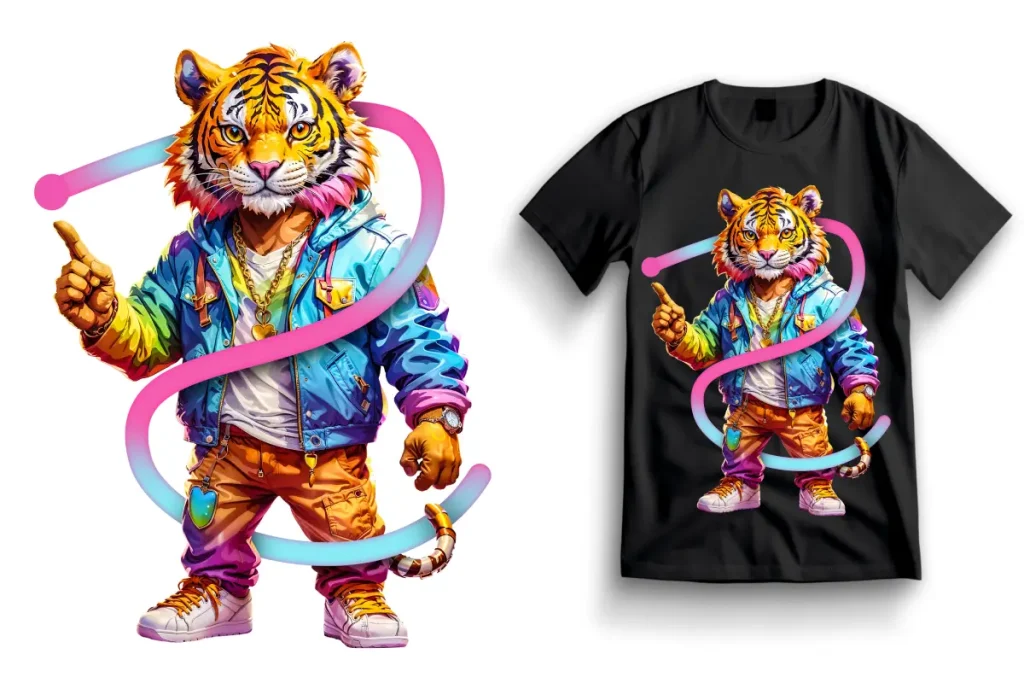
Modern garment print shops and independent fashion designers face a shared challenge in balancing production speed with retail quality. Finding an embellishment method that replicates complex digital artwork on fabric without the steep financial setups of traditional printing has completely changed the industry landscape. The breakthrough of premium dtf transfers has introduced a new era of flexibility, enabling apparel creators to print vivid graphics on custom film and transfer them directly to texturized substrates. By removing color count restrictions and heavy machinery limitations, this approach has quickly become the preferred operational model for custom brands looking to fulfill orders with high structural durability and striking visual fidelity.
The Technical Blueprint of Modern Digital Film Systems
Understanding the layers that form a premium heat transfer is essential for optimizing any garment decoration workflow. The term DTF stands for Direct-to-Film, a method where graphics are systematically printed onto a coated polyethylene terephthalate sheet instead of dropping wet ink straight onto absorbent fabric loops. The printing process uses high-capacity inkjet heads to lay down full-color cyan, magenta, yellow, and black pigments, followed immediately by a dense backing layer of white textile ink in a single pass.
The stabilization phase occurs while the white background ink remains wet on the matte film layer. The sheet passes into an automated shaker system where a uniform coating of thermoplastic polyurethane adhesive powder is applied across the design matrix. The film then moves through a calibrated conveyor curing oven or thermal heat tunnel, which transforms the loose powder into a smooth, flexible solid barrier. When this cured layer is placed on an apparel item and clamped under a commercial press platen, the adhesive melts once more, locking the colored pigments deep into the weave of the textile to achieve a permanent bond.
Operational Advantages Over Screen Printing and DTG
For several generations, conventional screen printing held the highest market share for bulk uniform orders. While screen printing remains highly economical for minimal vector logos run in thousands of identical pieces, it becomes slow and expensive when processing modern multi-colored designs because every unique shade demands a separate physical mesh frame setup. Direct-to-Garment printing arrived as a digital option but brought strict fabric limitations, requiring heavy liquid chemical pre-treatments and locking production almost entirely to pure cotton blanks.
Modern commercial film transfers successfully bypass these historic engineering bottlenecks, offering distinct manufacturing advantages that directly improve daily profit margins:
- Complete Substrate Adaptability: Operators can decorate pure cotton, synthetic polyester, nylon windbreakers, spandex, denim, and heavy canvas bags using identical print setups.
- Micro-Detail and Gradient Precision: Because the ink sets on a stable plastic substrate instead of spreading across porous textile threads, tiny text lines, complex textures, and photographic gradients remain perfectly sharp.
- Elimination of Minimum Order Restrictions: Multiple small, highly intricate custom graphics can be nested tightly together on a single master roll of transfer film, allowing shops to print a single sample at the same unit cost as a larger batch.
- Flexible Hand Feel and Superior Stretch: The microscopic polyurethane backing creates a finished graphic that stretches and bends naturally with the fabric instead of forming a thick, rigid plastic shell on the chest.
Sourcing Premium Transfers Near Me to Lower Production Risks
Because fashion cycles move rapidly and commercial clients require quick turnaround times, garment decorators frequently search online for high-caliber dtf transfers near me to minimize shipping delays, lower transit costs, and eliminate international logistical friction. Having a dependable production house nearby acts as a crucial business safeguard when an unexpected rush order arrives or a viral internet trend demands immediate inventory replenishment.
However, printing professionals must understand that geographical proximity should never take priority over strict mechanical precision. Building a premium commercial transfer requires a perfect chemical balance between industrial printheads, stable ink viscosity, and moisture-controlled environment rooms. If a nearby vendor relies on converted desktop machinery or cuts corners on thermal curing temperatures, the resulting prints will split under tension, fail to peel cleanly during production, or wash out after a few cycles through a domestic washing machine. Working with a dedicated facility utilizing wide-format industrial hardware is mandatory for protecting your brand reputation.
Setting the Quality Standard with the Best DTF Transfer at Houston
The southern textile market has grown into an influential hub for custom apparel manufacturing, with thousands of local organizations requiring heavy-duty print performance and rapid production turnaround times. Securing the absolute best dtf transfer at Houston requires selecting a dedicated production facility that operates industrial, multi-head printing machinery backed by extensive background experience in textile chemistry. The intense summer heat and high atmospheric humidity of the Gulf Coast mean that raw components must be stored and processed under strict environmental controls.
Procuring your custom production films from a premier regional supplier guarantees that your graphics are printed in fully climate-controlled rooms with automated ambient moisture regulation. This strict quality control prevents the water-based textile inks from drying out prematurely inside the microscopic nozzle channels and guarantees that the hot-melt powder cures evenly across the graphics. When these premium sheets arrive at your facility, they perform predictably under the heat press, lowering your scrap rates to zero and protecting your blank garment investments.
Optimizing Business Scaling via a Local Houston DTF Transfer Service
Integrating a professional Houston dtf transfer service into your daily production line provides your custom apparel brand with a massive strategic edge over your competitors. Instead of locking up large amounts of liquid cash flow in pre-printed warehouse inventory that might become obsolete, boutique store owners and merchandise printers can maintain a lean, just-in-time production model. You can confidently list a wide variety of colorful designs on your website, accept customer funds upfront, and apply the transfers on demand as orders come through.
To secure the longest possible service life and retail quality from these premium regional transfers, your workshop staff should adhere to a structured application process. Always pre-press your blank t-shirts or hoodies for roughly five seconds to drive out natural atmospheric moisture and flatten out fabric wrinkles. Ensure your commercial heat press machine applies firm, uniform pressure across the whole surface, and use a reliable digital thermometer to verify that the heating core matches the supplier’s recommendations. These basic quality controls ensure a permanent molecular bond that stays pristine for years.
Frequently Asked Questions
What specific graphic formats yield the absolute highest print quality for commercial film transfers?
For pristine visual accuracy and crisp line definition, design teams should ideally supply native vector graphics in AI, PDF, or EPS formats. If your production workflow relies on raster imagery such as PSD or PNG files, ensure that the background layer is entirely transparent and that the document holds a minimum resolution of 300 DPI at the exact target dimensions intended for the garment.
Is it possible to apply these professional transfers onto sublimated polyester sportswear without color bleeding?
Yes, though it requires specific preventative measures. Standard digital films can suffer from dye migration, a common chemical issue where the active sublimation dyes of a polyester garment bleed directly through the white ink layer during the heat press cycle. To block this reaction, print houses utilize specialized low-bleed or anti-migration black adhesive powders that act as a physical shield, locking the synthetic dyes beneath the print matrix.
What temperature and pressure settings are universally recommended for applying these prints?
While settings can vary slightly depending on the exact adhesive powder formulation, the general baseline for commercial application sits between 285 and 320 degrees Fahrenheit. The heat press should be locked down under firm, heavy pressure for roughly 10 to 15 seconds. It is always best practice to perform a quick test press on a scrap piece of fabric when working with a new batch of garments.
Can a standard household clothing iron be used to fuse these transfers onto retail merchandise?
While an iron can technically generate enough heat to melt the polyurethane powder layer, it is highly discouraged for commercial retail products. A domestic clothing iron cannot apply the continuous, uniform heavy downward pressure or guarantee the exact, stable temperatures that an industrial heat press provides, which typically leads to premature graphic peeling and poor fabric adhesion.
Building a highly profitable custom apparel operation in today’s crowded commercial marketplace requires utilizing dependable production tools and choosing material partners who refuse to compromise on technical standards. At Harwin DTF, we are deeply committed to providing industrial-level accuracy, brilliant color saturation, and magnificent wash resistance with every single transfer roll we deliver. Whether you are expanding a boutique streetwear label, supplying promotional gear for major corporate events, or scaling your local print shop, our state-of-the-art facility provides the premium printing solutions your business needs to stay ahead of the competition. Reach out to the Harwin DTF team today to explore our bulk commercial options and see how we can optimize your workshop production pipeline.
Anahtar Kelime: DTF
Kategori: DTF Transfers